
Systems Integration, Workflow Strategy & Website Redesign
Hired for design. Ended up leading a system transformation.
I was brought in to improve visual design, web presence, and marketing. Within weeks, it became clear the real problem wasn’t visual—it was operational. Core systems were disconnected, workflows were manual, and critical processes were fragmented across departments.
The company had spent years attempting to solve a FileMaker and QuickBooks integration without success. No one internally or externally had been able to move it forward.
I took ownership of defining the problem, structuring the solution, and moving the project into execution.
The Problem
- Disconnected systems with no integration between operations and finance
- Heavy reliance on manual processes to move information
- Data inconsistencies across departments
- Redundant workflows and duplicated effort
- Lack of visibility into production, inventory, and financial activity
What should have been a connected system was operating in isolated parts.
Defining the Solution
Before anything could be built, the problem needed to be made clear and actionable.
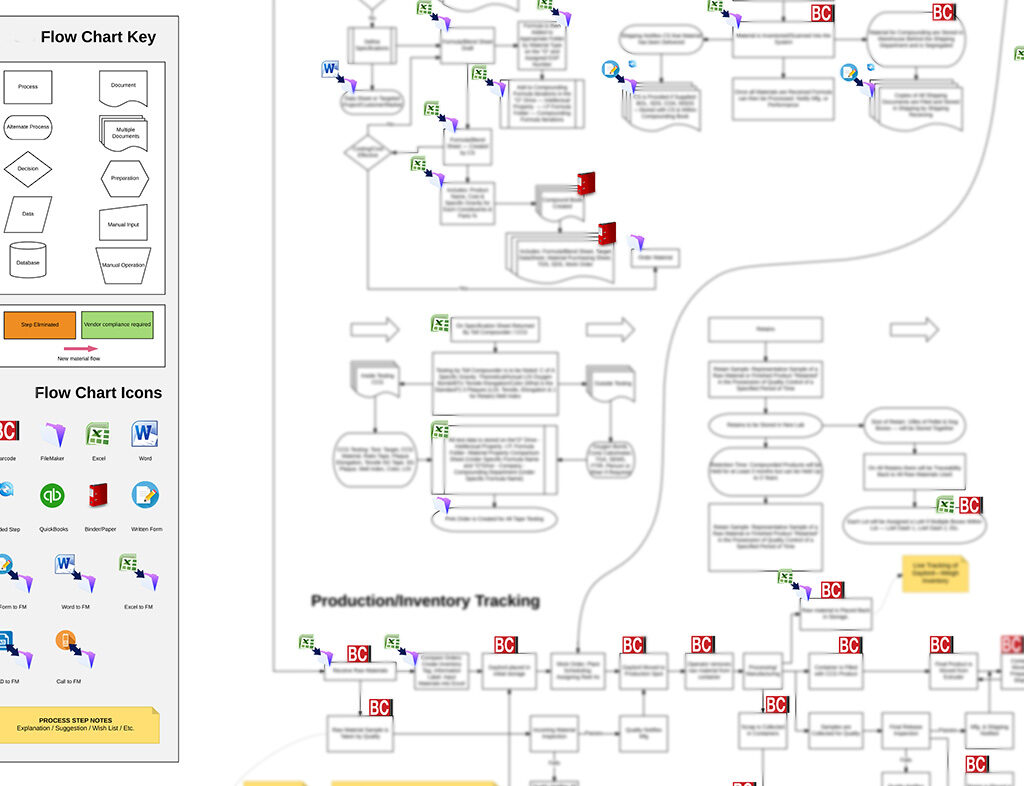
I worked across departments to understand how information moved through the business and where breakdowns occurred. This led to a simple, executable requirement:
Create a QuickBooks invoice automatically from a FileMaker packing list.
This shifted the project from an abstract technical challenge to a defined business outcome—reducing manual work, improving accuracy, and enabling real-time financial visibility.
Building the Execution Framework
With no existing structure in place, I created a phased implementation plan to move the project forward.
I defined:
- Immediate priorities, mid-phase execution, and final rollout stages
- Responsibilities across the FileMaker developer, IT staff, and internal teams
- Task-level deliverables and deadlines
- Hardware selection, installation planning, rollout strategy, and training
This framework aligned development, operations, and finance into a coordinated effort and turned a stalled initiative into an executable plan.
Vendor Selection & Oversight
I led the evaluation of FileMaker developers, comparing proposals, scope, and cost ranges.
The integration estimates were competitive, while broader system estimates varied significantly, requiring careful assessment of feasibility and risk. I selected the vendor best positioned to deliver and moved the project into active development.
I acted as the liaison between:
- External developer
- Finance
- Internal FileMaker consultant
I monitored:
- Progress against defined scope
- Alignment with business requirements
- Billing against actual work completed
This ensured accountability and kept the project on track.
Making the System Work
Execution required more than integration—it required restructuring how the business operated.
I led efforts to:
- Identify and eliminate redundant workflows
- Convert manual and static processes into structured digital systems
- Align operational data with financial systems
- Support integration between FileMaker and QuickBooks
- Coordinate development, testing, and rollout
This transformed the system from fragmented and reactive to structured and operational.
The Result
- Reduced manual work and operational friction
- Improved accuracy across production, inventory, and finance
- Streamlined communication between departments
- Established a scalable foundation for future growth
- Moved a multi-year stalled initiative into implementation
What was previously undefined and unresolved became structured, aligned, and executable.
Website Redesign
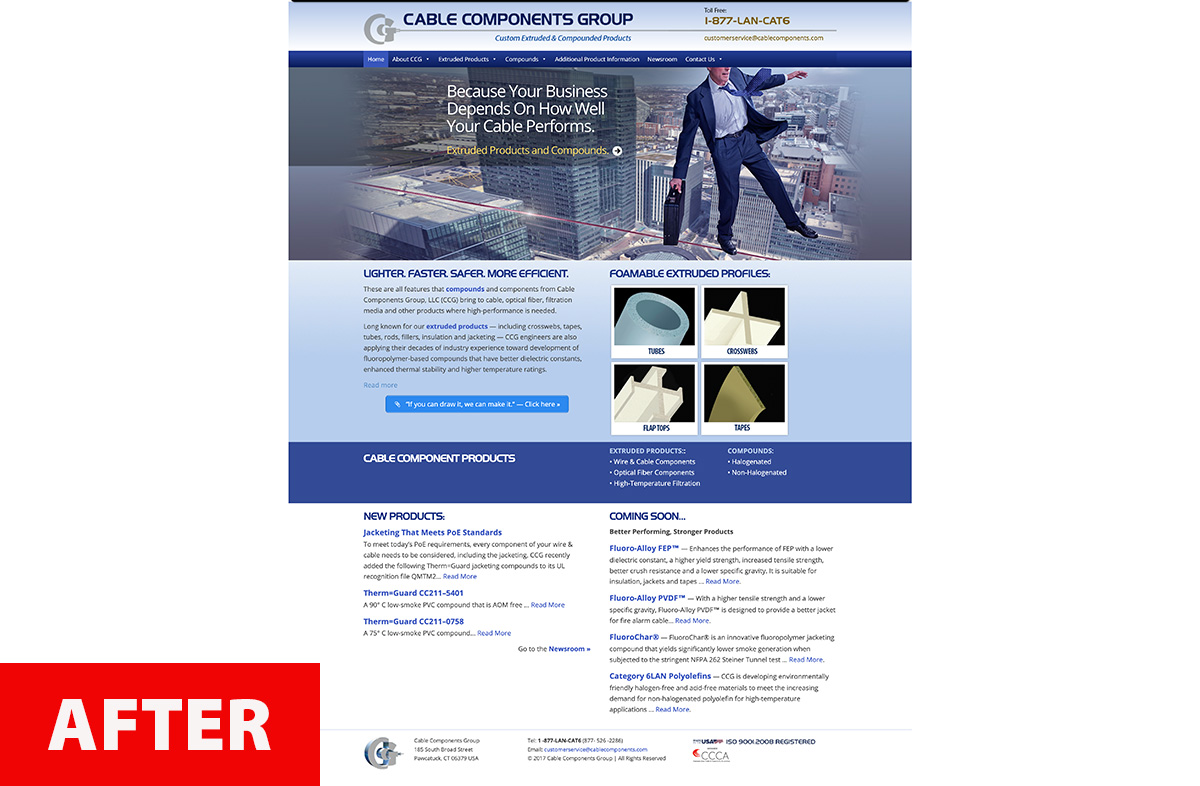
Alongside the system transformation, I redesigned the company website to reflect a more modern, usable digital presence aligned with the improved internal structure.
Before: Outdated, difficult to navigate, inconsistent presentation
After: Clear, structured, aligned with business needs and capabilities
What This Demonstrates
- Ability to define and structure complex, ambiguous problems
- Ownership beyond role, from concept through execution
- Alignment of business, technical, and operational systems
- Experience managing vendors, scope, and implementation
- Focus on building systems that are usable, scalable, and effective
Note
Some details have been simplified or generalized to respect proprietary systems and internal processes.